
Showroom Floors That Do Not Carry Tire Marks
Bright lighting makes dust, scuffs, and tire marks difficult to hide. Surface-appropriate floor care can concentrate on the sales floor and the paths customers use around displayed vehicles.
Serving Elgin, Illinois & surrounding areas
Mon–Fri 8am–6pm · Sat 9am–2pm
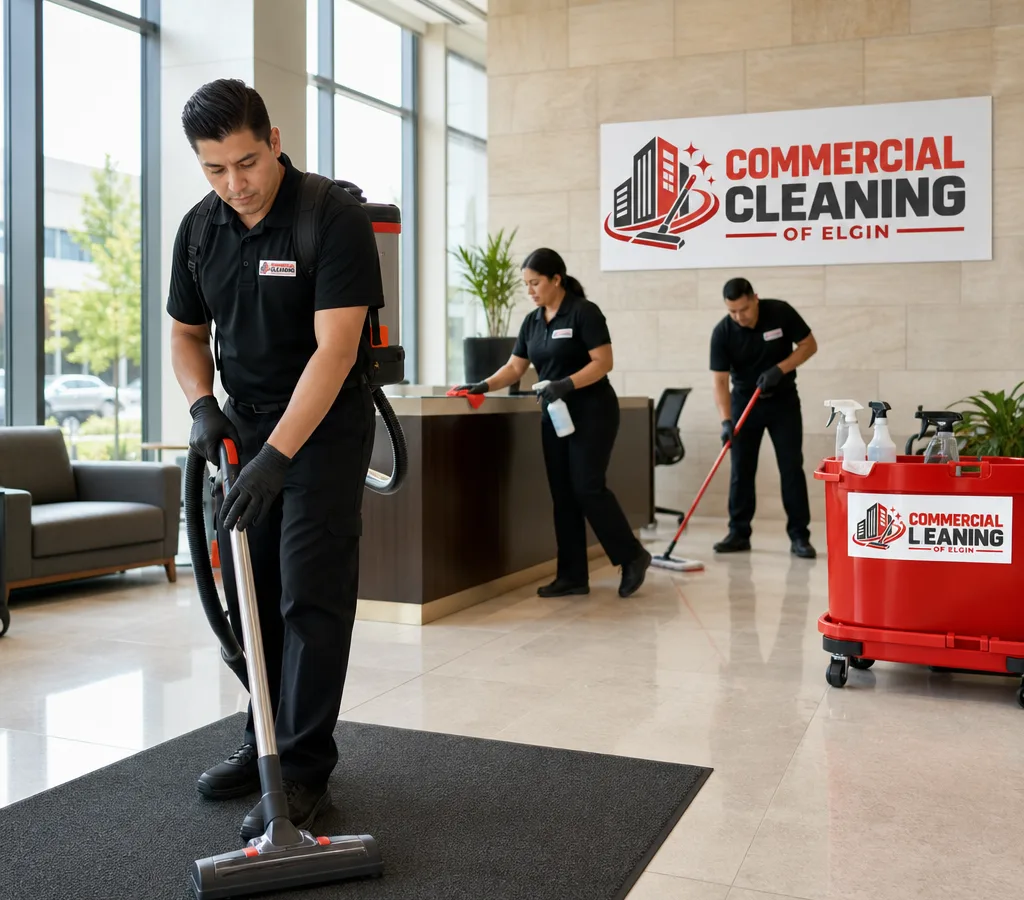
Cleaning for the Showroom and Service Drive
Tire marks on showroom floors, dust under bright lights, and service-bay grit near carpeted areas can make a dealership look less ready than its inventory.
A Sales Floor That Shows Every Mark
A dealership has two very visible environments under one roof. The showroom needs to look crisp under bright lights, while the service side brings tire debris, dust, and traffic toward the lounge, restrooms, and entry.
Auto dealership cleaning is built around that contrast. It can prioritize showroom floors, entry glass, customer seating, coffee areas, public restrooms, and the transition points where service-bay grit reaches finished customer spaces.
The goal is not to interfere with vehicle presentation or active service work. A written scope defines the approved areas, timing, and surfaces so the building is cleaner without disrupting sales or service activity.
A Plan for Sales and Service Traffic
Bright lighting makes dust, scuffs, and tire marks difficult to hide. Surface-appropriate floor care can concentrate on the sales floor and the paths customers use around displayed vehicles.
Entry doors, showroom partitions, and office glass collect fingerprints quickly. Detailed glass care keeps those marks from interrupting the clean presentation of the space.
A lounge and coffee area can become cluttered during a busy service day. The route can reset visible surfaces, waste areas, floors, and the details waiting customers notice.
Public restrooms are part of the dealership experience, especially for customers waiting on service. The plan can address fixtures, floors, touch points, waste, and agreed supplies.
Dust and debris from the service drive can travel toward carpeted offices and customer spaces. Cleaning can prioritize those transitions so the showroom condition does not drift during the day.
Dealerships have valuable inventory and active work zones that require clear boundaries. The written plan identifies the approved surfaces and areas rather than assuming access around every vehicle.
Focused on the Customer Path
The cleaning route follows the customer from the front door through the showroom, lounge, restrooms, and service waiting area. That path receives a different emphasis from active service and vehicle-display zones.
The client defines which offices, showrooms, lounges, and transition areas are available. Access and vehicle boundaries are established before routine work begins.
The strongest dealership cleaning plan treats the showroom and service drive as connected but different environments. It protects the customer experience while respecting the limits of active vehicle and work areas.
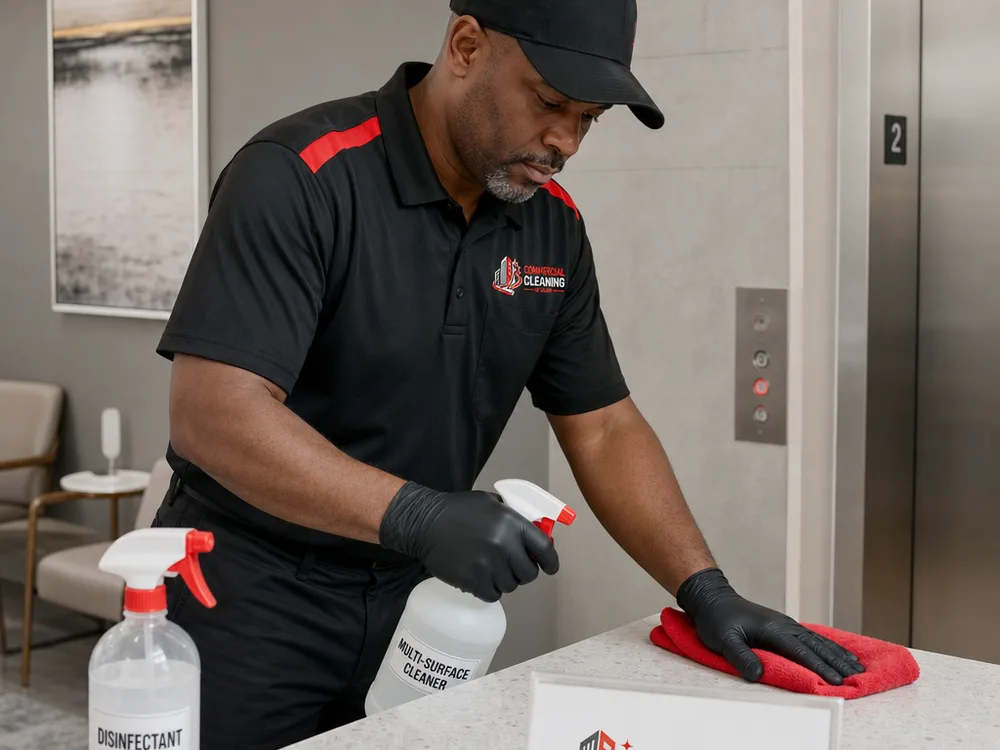
Planned Around Sales and Service
The walkthrough identifies where customers enter, wait, browse, and cross paths with service traffic. It highlights the transitions where grit, fingerprints, and floor marks become most visible.
The client confirms which showroom areas, offices, lounges, and service-adjacent spaces are included. This keeps cleaning activity focused on approved surfaces without assuming access around inventory or active bays.
Cleaning can be planned around operating hours, service volume, and the time customer-facing spaces are clear. The right window helps preserve the showroom presentation without disrupting the day.
The route ends with the surfaces that stand out under lighting and at close range. Floors, glass, lounge areas, and restrooms receive attention before the next customer arrives.
Planning a Dealership Scope
Auto dealership cleaning costs in Elgin depend on showroom size, floor materials, glass, lounge and restroom use, service-drive traffic, and the scheduled cleaning window. Smaller showrooms may be priced as focused recurring service, while larger facilities are evaluated by their customer-facing areas and approved tasks.
The amount of floor detail, transition-area cleaning, public waiting spaces, and access limits affects the final estimate. Exact pricing is confirmed after a walkthrough so the plan fits the dealership's real layout and priorities.
Request a CallbackDealership Operator Questions
Yes, approved showroom floor areas can be included with methods suited to the surface. The walkthrough identifies tire-marked lanes, bright-light areas, and traffic patterns.
Lounges and coffee areas can be part of the customer-facing route. The scope can cover accessible surfaces, waste, floors, and visible detail work.
The plan can prioritize carpeted transition zones, entries, and areas where debris travels toward customer spaces. Active bays and vehicle areas remain within the agreed access boundaries.
Yes, accessible glass can be included because fingerprints are especially visible under showroom lighting. The scope identifies the panes and surfaces to be cleaned.
Restrooms can be included with fixture, floor, waste, touch-point, and supply tasks. The frequency is based on customer and service traffic.
Size, floor type, glass, lounge use, restrooms, traffic, access, and frequency affect the estimate. A walkthrough helps set the appropriate written scope.
Start With a Clear Scope
A dealership should look as ready for a test drive as the vehicles on the floor. Request a walkthrough to prioritize the showroom, lounge, restrooms, and service-drive transition areas.
Request a Walkthrough
Tell us the type of building you manage, the hours it is occupied, and the areas that matter most. We will walk the space, set a checklist by area, and confirm a schedule that fits how the building is used.
Commercial Cleaning of Elgin
223 Dundee Avenue, Suite 4, Elgin, IL 60120
Send your details and we will follow up to arrange the walkthrough.