
Dining Floors That Do Not Stay Tacky
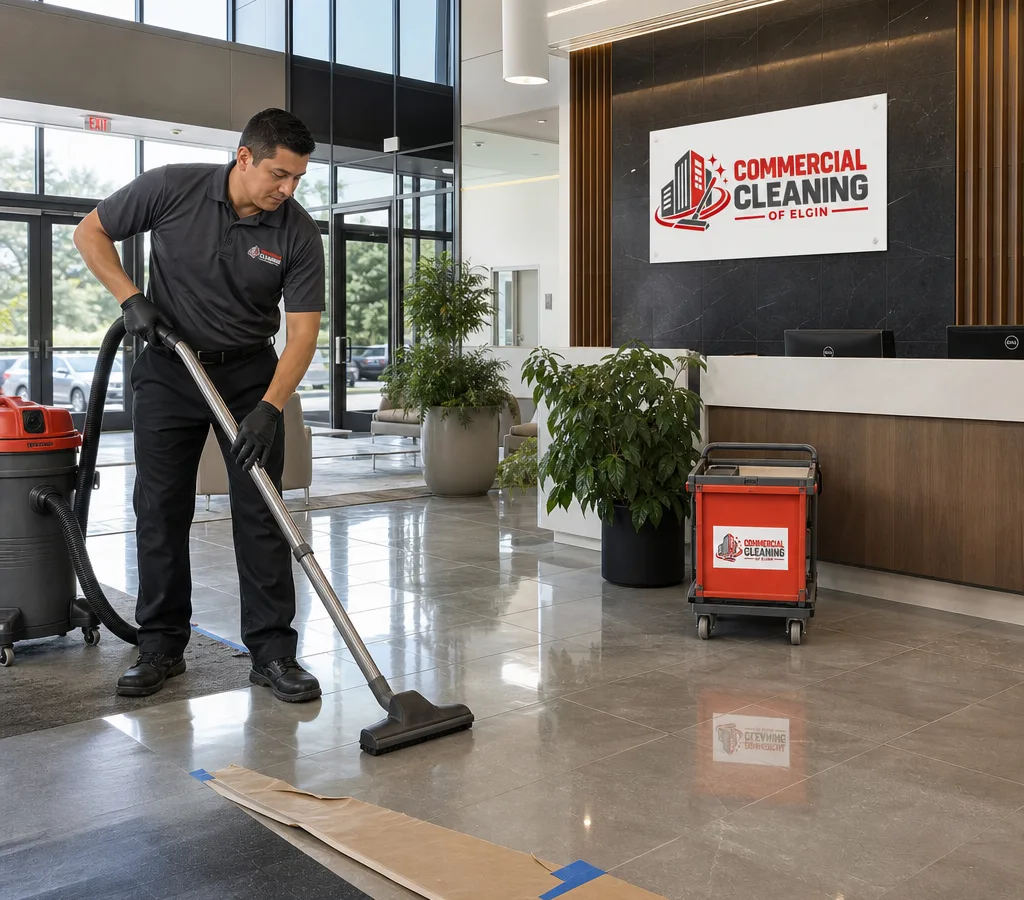
Spills, foot traffic, and grease migration make dining floors show wear quickly. Surface-appropriate cleaning focuses on the paths guests and staff use throughout service.
Serving Elgin, Illinois & surrounding areas
Mon–Fri 8am–6pm · Sat 9am–2pm
Restaurant-Specific Cleaning
Grease migrates beyond the line, entry mats stop holding dirt, and diners judge restrooms mid-service: restaurant cleaning must solve the visible pressure points.
When Service Ends, the Cleaning Window Opens
A restaurant can serve a strong meal and still leave the wrong impression if the entry looks tracked in, the dining floor feels sticky, or the restroom shows a busy shift. Those issues build while the team is focused on guests and service.
Restaurant cleaning is planned around the surfaces and time pressure unique to a dining environment. The scope can prioritize guest-facing floors, tableside areas, entry glass, restrooms, and other spaces that need to look ready again before the next opening.
Back-of-house work is included only when requested and defined in the written scope. That keeps the plan clear about access, surfaces, and the limited cleaning window that often begins only after close.
A Plan for the Next Opening
Spills, foot traffic, and grease migration make dining floors show wear quickly. Surface-appropriate cleaning focuses on the paths guests and staff use throughout service.
Door glass, mats, and first-floor traffic lanes collect a full day of fingerprints and tracked-in soil. Attention after closing helps the restaurant look cared for before the first guests arrive.
Restaurant restrooms are judged in the middle of a visit, not after the shift has ended. A defined reset can cover fixtures, floors, waste, touch points, and agreed supply checks.
Chairs, booths, ledges, and visible partitions gather crumbs, smudges, and dust during a busy service. The cleaning plan can give those guest-facing details a consistent after-close routine.
Some areas need special attention because their condition matters to the operation and inspection readiness. The written checklist identifies the approved surfaces and tasks rather than making assumptions.
The period after the last table leaves is often the only workable cleaning time. Scheduling is shaped around closing responsibilities, access, and when the dining room can be fully cleared.
Built for Guest-Facing Spaces
The scope starts with what diners touch, see, and walk through. Dining rooms, entrances, restrooms, and visible glass often need the most reliable after-close attention.
Each restaurant has its own layout and access limits. The written plan separates guest areas from any back-of-house work requested by the operator.
The service is designed to prepare the restaurant for the next opening, not to duplicate the work of the kitchen team. Clear boundaries let the cleaning effort land where customers and staff need it most.
A Better Close-to-Open Routine
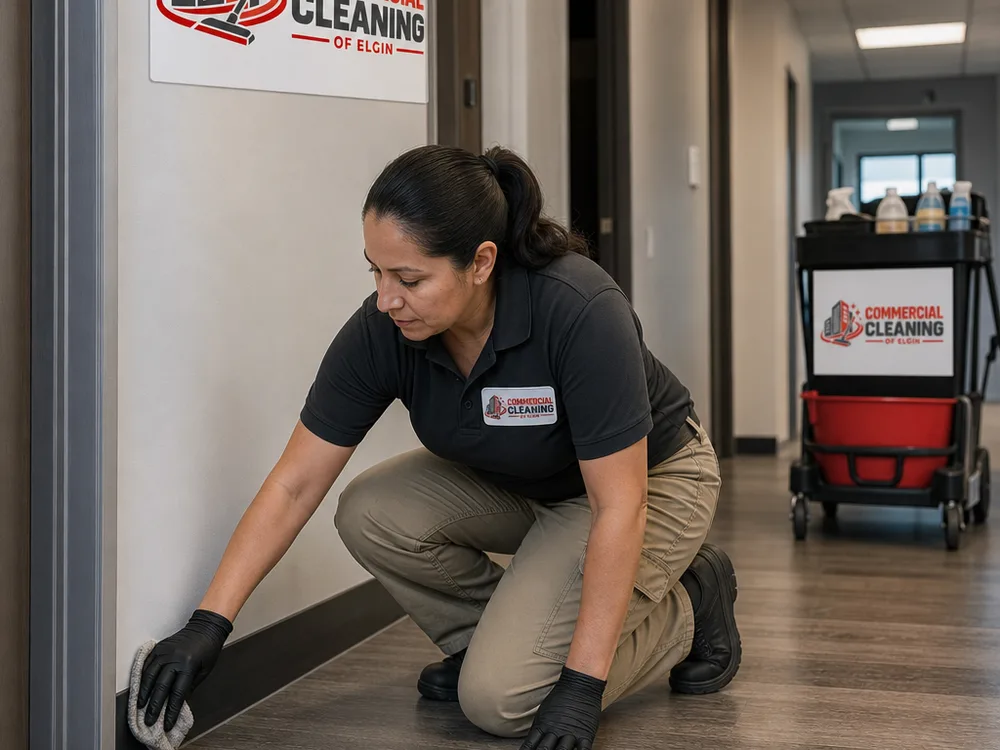
The walkthrough follows the path from the door to the dining room and restroom. It identifies the surfaces that show a busy service first and the rooms that need the most dependable reset.
Tasks are documented by area, including any requested back-of-house work. This creates clear boundaries for surfaces, access, and responsibilities after the restaurant closes.
The cleaning window is set around final service, staff duties, and the time the dining room becomes available. That timing helps the work be completed without competing with the close.
The completed route focuses on the conditions guests will encounter at opening. Floors, entries, restrooms, and dining-room details are returned to a cleaner baseline for the next shift.
Budgeting for the Dining Environment
Restaurant cleaning costs in Elgin depend on the dining area size, restroom count, floor type, service frequency, access after close, and whether specific back-of-house tasks are requested. Smaller locations may be priced as focused recurring visits, while larger spaces are evaluated within broader commercial ranges.
The condition of entry floors, dining surfaces, visible glass, and the available cleaning window all shape the plan. Exact pricing is confirmed after a walkthrough so the scope reflects the restaurant's real layout and priorities.
Request a CallbackRestaurant Operator Questions
Yes, the service can be scheduled for the period after dining service ends. The timing is planned around staff closeout and access to guest areas.
They can be included only when requested and listed in the written scope. The walkthrough clarifies access, surfaces, and the tasks to be performed.
Yes, dining floors can be a priority when spills, traffic, and grease migration are affecting the guest experience. The method is selected for the floor material and condition.
Restroom tasks can include fixtures, floors, touch points, waste, and agreed supply checks. The scope is built around use levels and the available service window.
Yes, entry glass, mats, and nearby floor traffic lanes can be part of the guest-facing route. These areas often need attention after a full day of arrivals.
Size, frequency, floor types, restroom use, after-close access, and the requested areas all affect the estimate. A walkthrough provides the detail needed for accurate pricing.
Start With a Clear Scope
The final task after service should leave the dining environment ready for the first guest tomorrow. Request a walkthrough to set a restaurant cleaning scope around your close and opening rhythm.
Request a Walkthrough
Tell us the type of building you manage, the hours it is occupied, and the areas that matter most. We will walk the space, set a checklist by area, and confirm a schedule that fits how the building is used.
Commercial Cleaning of Elgin
223 Dundee Avenue, Suite 4, Elgin, IL 60120
Send your details and we will follow up to arrange the walkthrough.