
An Assessment Before Treatment
Not every dull floor needs the same response. The first step is to identify the material, finish condition, traffic pattern, and visible buildup before choosing the service.
Serving Elgin, Illinois & surrounding areas
Mon–Fri 8am–6pm · Sat 9am–2pm
Surface-Specific Care
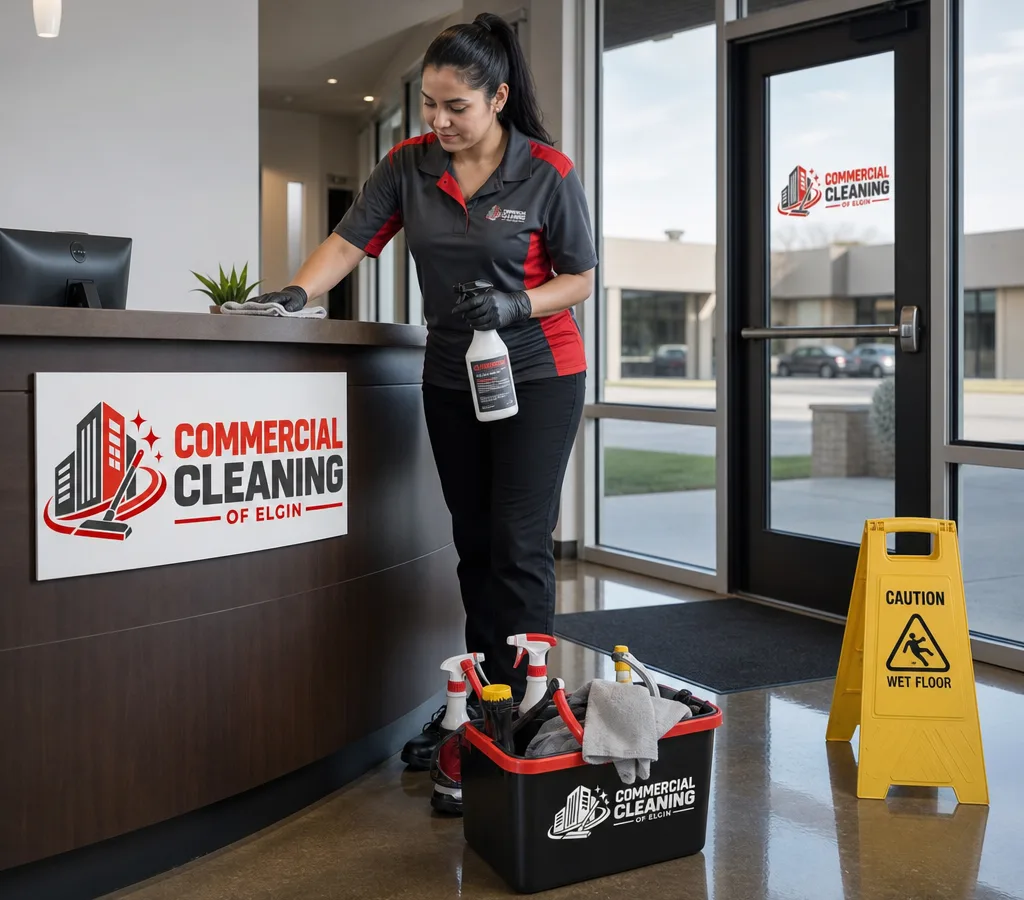
Gray visitor lanes, salt haze, and tired finish make a building look neglected: floor care treats the surface instead of hiding the problem.
When Routine Mopping Is Not Enough
Floors carry every arrival, spill, cart, and weather change into the building. When visitor lanes turn gray or a hard-floor finish loses its even look, routine cleaning often cannot restore what has worn away.
Floor care is for the treatment itself: stripping and waxing resilient floors, burnishing maintained finishes, extracting embedded carpet soil, and addressing tile and grout that has lost its clean appearance. Each method is selected for the material, not applied as a catch-all fix.
Elgin winters make entrances especially demanding because salt and moisture work across hard surfaces and carpet edges. A surface-specific plan can address the areas that receive the most abuse before the wear spreads farther inside.
A Better Surface Plan
Not every dull floor needs the same response. The first step is to identify the material, finish condition, traffic pattern, and visible buildup before choosing the service.
Resilient flooring can lose its protective finish in the paths people use most. Strip-and-wax work removes worn layers and applies a fresh finish where that treatment fits the surface.
Some finished floors need periodic burnishing rather than a full restoration. This service helps maintain an even appearance between larger floor-care cycles.
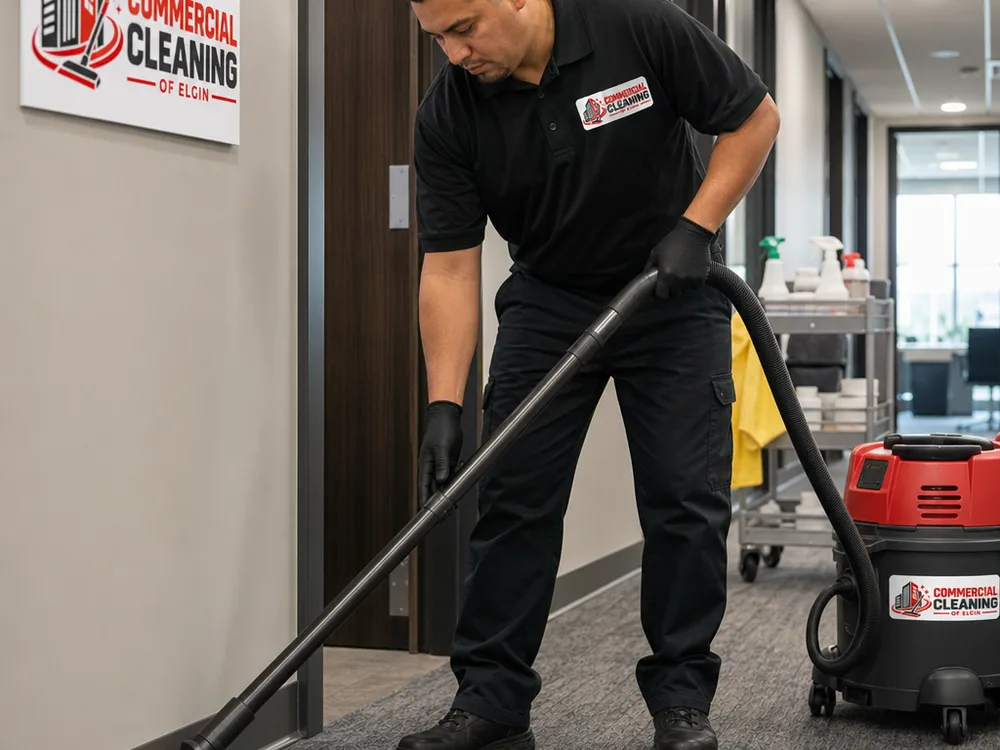
Vacuuming handles loose debris, but it does not always lift soil that has settled below the pile. Carpet extraction targets that deeper accumulation in walkways, entries, and common rooms.
Tile can look clean while grout lines keep holding onto soil. Detail work concentrates on those recessed lines and the edges where ordinary mopping leaves a dull outline.
Floor treatments need a realistic window for cleaning, drying, and returning the area to use. The service plan accounts for occupancy so newly treated surfaces are not immediately disrupted.
Matched to the Material
The most effective treatment depends on the surface underfoot and the type of wear it carries. A polished concrete aisle, carpeted lobby, vinyl tile corridor, and ceramic restroom floor should not receive the same approach.
A walkthrough makes it possible to separate routine maintenance from treatments that need periodic scheduling. That distinction helps protect the floor instead of repeatedly using a method that is too mild or too aggressive.
A floor can be structurally sound and still make the building feel worn down. Surface treatment focuses on the visible condition people experience at the door, in the hall, and throughout shared spaces.
From Condition to Treatment
The walkthrough notes materials, finish condition, traffic lanes, staining, and entry damage. This prevents a carpet, tile, and finished resilient floor from being grouped into one vague service.
The scope then matches a treatment to each surface area. It may call for extraction, grout detail work, burnishing, or a strip-and-wax service based on what the floor needs.
Floor work is scheduled when rooms can remain clear long enough for treatment and drying. Access planning is especially important for lobbies, corridors, and areas with continuous foot traffic.
After the treatment, the building has a clearer baseline for ongoing care. Periodic review helps determine when a maintained surface needs another service instead of waiting for it to look completely worn.
Budgeting by Surface
Floor care pricing in Elgin varies by material, condition, square footage, furniture movement, and the treatment required. Smaller projects may be priced as a focused service, while larger facilities may fall within commercial cleaning ranges of about $0.10 to $0.25 per square foot when recurring work is involved.
Carpet extraction, strip-and-wax work, burnishing, grout detail, and access timing affect the total scope. Exact pricing is confirmed after a walkthrough so the treatment matches the floor rather than relying on a guess.
Request a CallbackSurface Care Questions
It is a treatment for appropriate resilient flooring that removes worn finish and applies a new protective layer. The floor material and condition should be assessed before it is recommended.
No, burnishing is generally a maintenance step for an existing finish. It can improve the appearance of a suitable finished floor between larger restoration services.
Extraction can target embedded soil that vacuuming does not remove. Results depend on the carpet condition, fiber type, and how long the soil has been present.
Tile and grout can be included as a surface-specific service. The scope identifies the rooms, condition, and access needs before scheduling work.
Moisture, salt, and grit are carried in on shoes and carts. Those materials can dull finishes and collect at carpet edges if they are not addressed regularly.
Yes, a service window can be planned around traffic and drying needs. The right timing helps keep treated areas clear until they are ready for use.
Start With a Clear Scope
Worn floors do not improve because they are cleaned more often with the same method. Request a walkthrough to identify the surface treatment that fits each high-traffic area.
Request a Walkthrough
Tell us the type of building you manage, the hours it is occupied, and the areas that matter most. We will walk the space, set a checklist by area, and confirm a schedule that fits how the building is used.
Commercial Cleaning of Elgin
223 Dundee Avenue, Suite 4, Elgin, IL 60120
Send your details and we will follow up to arrange the walkthrough.